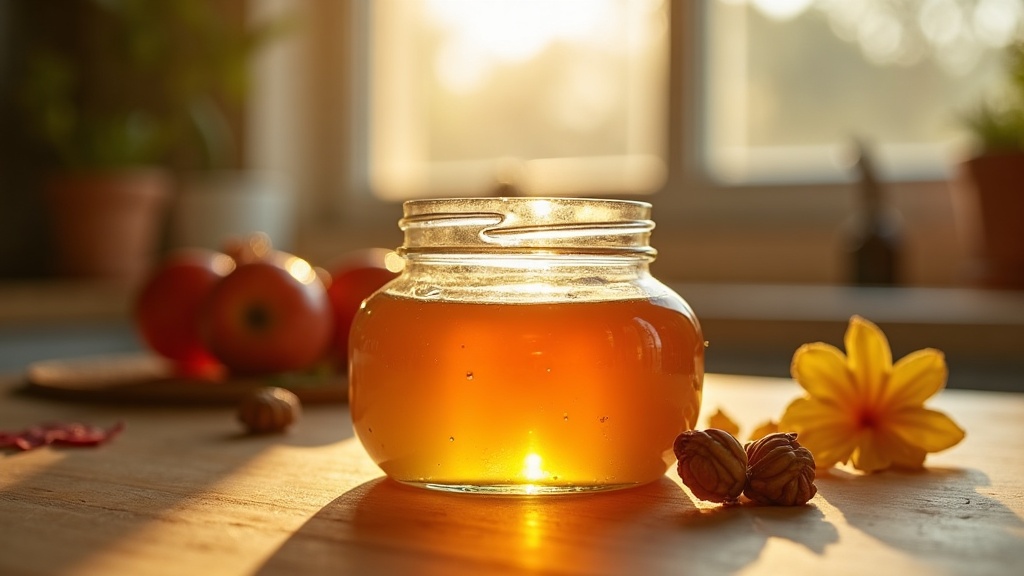
Before the coffee, before the to-do list — a quiet ritual involving raw honey has quietly found its way into many morning routines past 50. Here’s the tradition behind it, explained in plain, practical language.
A quick, practical look at what tends to change with age — and why noticing it is completely normal.
Daily energy levels naturally ebb and flow with age, and that shift can make sustained focus feel a little different than it used to.
The body's internal clock adjusts as we age, which can subtly reshape when we feel sharpest and when we feel foggy.
Sleep quality and structure often shift after 50, and rest plays a well-known role in how clear-headed a day can feel.
What the body draws on for steady daily function isn't static — needs evolve, and small dietary habits, including a spoonful of honey in a morning routine, are part of how some people simply pay closer attention.
Separating old wives’ tales from what is actually well understood, without the scare tactics.
Forgetting things occasionally means something is seriously wrong.
Occasional forgetfulness is a normal part of aging for most people and isn’t automatically a sign of a serious condition.
Nothing about a daily routine can support how sharp a day feels.
Consistent daily habits — sleep, movement, and simple food choices — are widely recognized as part of general everyday wellbeing.
Natural ingredients like honey have no place in a thoughtful routine.
Many traditional diets have long included natural ingredients like honey as part of everyday customs, independent of any medical claim.
How many people fold this small ritual into a morning that’s already busy, without overhauling anything.
Pick one consistent moment in the morning — right after waking, or right before breakfast — and keep it simple and repeatable.
Attaching a new step to something already automatic, like making tea or coffee, makes it far easier to stick with over time.
Rather than tracking the habit itself, many people simply pay attention to how the rest of their morning unfolds.
Long before modern wellness trends, honey held a steady place in kitchens across many cultures — stirred into warm drinks, spread over bread, or taken on its own as part of a daily custom. Older generations often treated it less like a remedy and more like a ritual: something reliable, something with a rhythm, folded into the start or end of a day. That thread of consistency, passed down through households rather than laboratories, is part of why the habit has resurfaced in conversations among adults 50 and older today.
Insight: traditional food customs are often about ritual and consistency as much as they are about any single ingredient.
Losing track of keys or glasses occasionally is common, but noticing a pattern is worth acknowledging.
Difficulty remembering details from a conversation earlier that same day can be worth mentioning to a healthcare provider.
Feeling disoriented on a normally familiar walk or drive is a sign many professionals suggest paying attention to.
Trouble completing tasks that involve several steps in order can be a useful thing to note and discuss.
Asking the same question more than once in a short span is something worth bringing up with a professional.
Shifts in mood, withdrawal, or reduced interest in usual activities can accompany cognitive changes and deserve attention.
These testimonials reflect individual experiences and personal opinions only. Results and experiences vary from person to person. These statements have not been evaluated by the FDA and are not intended to diagnose, treat, cure, or prevent any disease.
No. This content is strictly educational and does not diagnose, treat, cure, or prevent any condition. It’s meant to inform, not replace medical advice.
It walks through the tradition behind this everyday habit, the reasoning some people find compelling, and how it fits into a simple morning routine.
It’s designed to be watched in one sitting, at a relaxed and easy-to-follow pace.
No special equipment is required. You simply need a quiet moment and a device to watch from.
Yes, it was written and organized specifically with an audience 50 and older in mind, using clear and straightforward language.
It draws on customs found across several cultures, where honey was traditionally part of everyday food habits rather than treated as a remedy.
The presentation itself is free to watch; any related offer details are explained clearly within the video.
Watch the free presentation to see the tradition, the daily routine, and the reasoning behind it — explained clearly, one step at a time.
Advertising Disclosure: This page contains sponsored content and affiliate links. We may receive compensation if you choose to engage with the offers presented here. This helps support the publication of free educational content and does not influence our commitment to transparency.
Content Disclaimer: The information provided on this page is for educational purposes only and is not intended as medical advice. It has not been evaluated by the FDA. This content is not intended to diagnose, treat, cure, or prevent any disease. Always consult a qualified healthcare professional before making changes to your health routine.
Results Disclaimer: Individual results and experiences vary. Testimonials shared on this page reflect personal opinions and are not a guarantee of any particular outcome or experience for every individual.
© 2026 lilyjoneseducationwork.com · All Rights Reserved